Tuesday, April 25, 2006

【Book】考える道具 Zeno and The Tourtoise

【本】ファーン,ニコラス.中山元訳.2003.『考える道具』.角川書店.

哲学史を平易な言葉と直近の例でザザーッとお浚いしている本。ただ著者自身のカラーがかなり出ている。全体としてはあまり読み易くない作品。原本を読んだ方がかえって分かりやすいかも。

アナロジー、アレゴリー、比喩については卑近で分かりやすい説明だが、プラトンとはあまり関係ないような気がする。
------------------------------------------
優雅な類比に魅惑されると、あるものと他のものが、必ずしも真理とは限らない。だからこそ、裁判の世界はもちろんのこと、西洋の哲学の伝統ではアナロジーより、論理的な推論が重要であると強調してきたのである。そしてアナロジーには主に、説明の役割をゆだねてきた。(中略)アメリカの哲学者のヒラリー・パトナム(一九二六―)は、パソコンが、コンピュータ・プログラムを動作させるハードウェアであるのと同じように、脳は意識という「ソフトウェア」を動作させる「ハードウェア」と考えてはどうかと提案している。このアナロジーはそれだけではなにも証明していない。脳がほんとうにコンピュータのように動作しているかどうかは、まだ証明の必要があるからだ。それでもこのアナロジーで考えると、本来は理解しにくいプロセスがどのように動作するのか、少し理解しやすくなるだろう。類比は理解の助けになる。だが、それだけのことだ。
---------------------------------------------------------
アリストテレスは人間の特性の中で、人間だけに固有なものが、人間の機能だと定義した。(中略)人間だけに固有で、ほかの生物にはないもの、それは理性の能力である。切るという機能を知らずには、ナイフを理解できないし、シイの樹に成長するという目的を知らずには、ドングリを理解できない。同じように、人間だけに固有の機能と、それによって人間が実現できる目的を調べなければ、人間を理解することはできない。この目的、すなわち人間の他のすべての目的がこれを実現する手段にすぎないような最終的な目的を、アリストテレスはエウダイモニアと呼んだ。このギリシア語は、幸福と訳せるだろう。アリストテレスにとってはエウダイモニアとは、理性に従って行動することである
----------------------------------------------------------------------
 世界を知覚すること、それは世界を変えることだ。これがドイツの哲学者イマヌエル・カントの洞察の要だ。(中略)
 カントは、一八世紀の哲学の二つの流れの間に新しい道を拓くことを望んでいた。一方の合理論者たちは、理性は感覚の助けなしに、世界を理解できると主張していた。他方の経験論者たちは、すべての経験は経験のうちにしっかりと根差したものでなければならないと考えていた。(中略)ヒュームは、知覚できる世界の知識は、感覚以外の手段では獲得できないことを指摘した。(中略)
 カントはこのような考え方は「神秘的」なもので、新しい形而上学をもちこむことになると批判した。人間が感官を通じて対象を知覚するのは事実だが、人間の目や耳が、対象の真のありかたを伝えていると考えるのは間違いだと、カントは指摘する。人間が感官で知覚するすべてのもの、そして人間が理性で理解するすべてのものは、感官でうけとった際に、知覚が処理を加えているのである。この処理において、ぼくたちの経験には、人間が知覚する対象の生のデータではなく、対象には含まれていないある要素がつけ加えられる。(中略)
 知覚においては、人間の器官の機能が媒介する。だからぼくたちは、知覚される以前の物自体、物そのものを認識することはできない。人間にふさわしい形で作り直された印象を、うけとっているにすぎないのである。人間には、知覚したものを処理する能力があるので、知識というものが可能になる。しかしすべての機能には制約がつきものだ。(中略)すべての知識には、媒介作用のために、ある<色>がついているというだけだ。ほかのどんな知覚システムにも、同じような限界がある。(中略)
 カントは人間の知覚には生まれつき、バイアスがかかっていると指摘したが、これは人間の知覚に、とても厳しい基準をつきつけたことになる。
----------------------------------------------------------------------
 ぼくたちは、二つの対立する見方が衝突すると、片方が完全に正しく、もう片方はまったく誤っていると考えがちだ。ところが議論というものは、正しい要素も、正しくない要素もどちらも少しずつ含んでいるものだ。(中略)それまで認められていた信念、システム、生き方に異議が提起され、争いのうちから、両方の最善の要素を含む新しいものが誕生する。しかし<綜合>というこのプロセスによって生まれた新しい信念、システム、生き方にも、遅かれ早かれ、ふたたび異議が提起され、文化的な衝突の歴史において、新しい一里塚となる。人間の歴史はこのようなサイクルによって発展すると、ヘーゲルは考えた。ヘーゲルはこのプロセスを弁証法と名づけている。そしてこのプロセスの最終的な目的は、完全な自由を実現することにあると考えた。
----------------------------------------------------------------------
 弁証法は、人間の生活のすべての領域にみられる内的な矛盾や対立を手掛かりにして、考察を進める。ヘーゲルは、すべての進歩は対立する矛盾を通じて実現されると考える。そして人間は、矛盾を次々と解決しながら、完全な統一体である絶対精神の実現に向けて進歩するというのである。
 弁証法は定立(テーゼ)、反定立(アンチテーゼ)、綜合(ジンテーゼ)という三つの段階で進む。定立というのは、ある観念や態度や文明や、歴史のうちの運動などである。この定立はそれだけでは不完全なものであり、遅かれ早かれ、これに対立した反定立が登場する。定立と反定立のどちらにも部分的な真理が含まれているので、この対立の結果、もっと高次の段階に、両方の真理を含む綜合が形成される。
----------------------------------------------------------------------

【Book】Fearn, Nicholas. 2001. Zeno and the tourtoise: How to think like a philosopher.

【Book】弁論術 PHTOPIKH

【本】アリストテレス.戸塚七郎訳.1992.『弁論術』.岩波書店.

じゃじゃん。今更ながら基本的な本登場。

-----------------------------------------
弁論術の定義と領域

それでは、弁論術とは、どんな問題でもそのそれぞれについて可能な説得の方法を見つけ出す能力である、としよう。なぜなら、このことは他のいかなる技術にも見られない仕事であるから。というのは、他の技術はどれも、その技術に属する固有の問題についてのみ教えたり説得したりできるのであるが(例えば、医術の場合なら健康的なものと病的なもの、幾何学の場合なら量に本来帰属すべき諸性質、算術なら数、についてそうであるし、その他の技術や知識についても同様である)、しかし弁論術は、言ってみれば、どんな問題が与えられても、それについての説得方法を見つけ出すことができるように思われるからである。それゆえ、われわれもまた、弁論術が技術としての機能を発揮する領域は或る特定の種類に限られているのではない、と主張するのである。
------------------------------------------
弁論術の説得の三種

 だが、言論を通してわれわれの手で得られる説得には三つの種類がある。すなわち、一つは論者の人柄にかかっている説得であり、いま一つは聴き手のが或る状態に置かれることによるもの、そしてもう一つは、言論そのものにかかっているもので、言論が証明を与えている、もしくは与えているように見えることから生ずる説得である。

 ところで、(1)「人柄によって」というのは、論者を信頼に値する人物と判断させるように言論が語られる場合のことである。つまり、人柄の優れた人々に対しては、われわれは誰に対するよりもより多くの信を、より速やかに置くものなのである。このことは一般にどんな場合にも言えることであるが、とりわけ、確実性を欠いていて意見の分かれる可能性がある場合にはそうする。だが、この信頼も、言論の内容によって結果されるべきであって、論者はこれこれの人間である、と先入観を抱くことによって結果するのであってはならない。すなわち、弁論の技術を講ずる二、三の人々は、論者の人柄のよさは言論の説得性にとりなんの足しにもならないとして、これも弁論の技術に含めることはしていないが、事実は彼らの言うのとは違い、論者の人柄は最も強力と言っても良いほどの説得力を持っているのである。

 これに対し、(2)「聴き手を通して」というのは、言論に導かれて聴き手の心が或る感情を抱くようになる場合のことである。なぜなら、われわれは苦しんでいる時と悦んでいる時とでは、或いはまた好意的である時と憎しみを抱いている時とでは、同じ状態で判定を下すとは言えないからである。そして実にこのことが、われわれに言わせれば、今日の弁論技術書の著者たちが唯一の目標として研鑽に努めている点なのである。だがこれらの点に関しては、感情について述べる時に詳細に説明されることになろう。

 また、(3)「言論そのものによって」説得がなされるというのは、個々の問題に関する納得のゆく論に立って、そこから真なること、或いは真と見えることを証明する場合を言う。

【Book】APIΣTOTEΛOΓΣ, PHTOPIKH. Oxford University Press.

hasn't reach me, yet.


【Book】Aristotle. 2004. translated by Roberts, M. Rhys. Rhetoric. Kessinger Press.

A very classic work for debating.

-------------------------------------
Rhetoric the counterpart of Dialectic. Both alike are concerned with such things as come, more or less, of both; for to a certain extent all men attempt to discuss statements and to maintain them, to defend themselves and to attack others.
--------------------------------------
Ordinary people do this either at random or through practice and from acquired habit. Both ways being possible, the subject can plainly be handled systematically, for it is possible to inquire the reason why some speakers succeed through practice and others spontaneously; and every one will at once agree that such an inqujiry is the function of an art.
-----------------------------------------
Of the modes of persuasion furnished by the spoken word there are three kinds. The first kind depends on the personal character of the speaker; the second on putting the audience into certain frame of mind; the third on the proof, or apparent proof, provided by the words of the speech itself. Persuasion isachieved by the speaker's personal character when the speech is so spoken as to make us think him credible. We believe good men more fully and more readily than others: this is true generally whatever the question is, and absolutely true where exact certainty is impossible and opinions are divided. This kind of persuasion, like the others, should be achieved by what the speaker says, not by what people think of his character before he begins to speak. It is not true, as some writers assume in their treatises on rhetoric, that the personal goodness revealed by the speaker contributes notheing to his power of persuasion; on the contrary, his character may almost be called the most effective means of persuasion he possesses. Secondly, persuasion may come through the hearers, when the speech stirs their emotions. Our judgements when we are pleased and friendly are not the same as when we are pained and hostile. It is towards producing these effects, as we maintain, that present - day writers on rhetoric direct the whole of their efforts. This subject shall be treated in detail when we come to speak of the emotions. Thirdly, persuasion is effected through the speech itself when we have proved a truth or an apparent truth by means of the persuasive arguments suitable to the case in question.
------------------------------------------

Monday, April 24, 2006

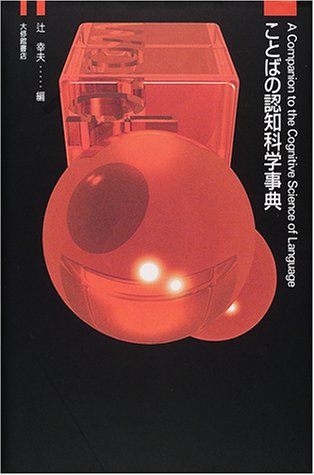
【Book】ことばの認知科学事典 A Companion to the Cognitive Science of Language

【本】辻幸夫.2001.『ことばの認知科学事典』.大修館書店.

認知言語学キーワード事典とはカバーしている範囲が微妙に違う。用途は同じ。

--------------------------------------
ビアリストック(Bialystok: 1987a, 1987b)やガランスボスとハクタ(Glambos and Hakuta: 1988)によるとバイリンガルはモノリンガルよりも言語の認知的制御能力にある程度すぐれている可能性がある。いくつかの実験では,バイリンガルが文法の誤りや単語の意味理解の深さなどによりいっそう認知的能力の高さを示した。ただ,2言語の相互発達に好影響を及ぼすためには,それらの2言語がある程度発達している必要があるという事実も発見されている。コミュニケーションの際にバイリンガルの感受性がより強いことも発見されている(Genesee, Tucker and Lambert: 1975)。

【Book】TSUJI, Yukio. 2001. A Companion to the Cognitive Science of Language. Tokyo: Taishushokan.

The area this book covers is a little different from the one that "An Encyclopedic Dictionary of Cognitive Linguistics". Basic fanction is pretty same.

Sorry, haven't translated the quotation, yet.

【Book】言語と脳 Language and The Brain

【本】オブラー,ローレイン・ジュァロー,クリス.若林茂則監訳.2002.『言語と脳: 神経言語学入門』. 新曜社.

-------------------------------------
 二言語使用者に関する最も寛容な定義はおそらく「ある一つの言語話者でその言語以外の言語を話せる人」というものであろう。この定義は二ヶ国語を両方とも同じくらい流暢に話せる人にぴったりであるが、第二言語もしくは外国語を一学期より短い期間だけ学習したことがあるような人も含んでしまう。(中略)より厳密な「二言語使用者」の定義には「二つの言語を母語話者なみに操る人」というものがあるが、もちろんこの場合は、学習初期段階にある学習者は除外される。また、第二言語で難なく理解することができる力はあるが、発話はできないという人も除外される。さらに、この定義では、流暢に話せるが「外国語なまり」がある人も、二言語使用者には含まれない。
 二言語使用者の定義におけるこういった二つの極端な形は、いずれも十分とは言えない。これはおそらく、どちらにおいても定義の判断基準を言語の操作能力の度合いに頼っているためである。より直感的に魅力的な「二言語使用」の定義では、最も重要な要因は、二つの言語を通常「使用していること」だと考える。(例: Francois Grosjean, 1982)
------------------------------------------------


【Book】Obler, Lorine K and Gjerlow, K. 1999. Language and the Brain. Cambridge: Cambridge University Press.

Sorry, haven't read in English, yet!!

【Book】関連性理論 Relevance

【本】スピルベル,ダン・ウィルソン,デイドル.1999.『関連性理論(第二版): 伝達と認知』.研究社.

-------------------------------------
人間の認知過程は、可能な限り最小の労力で可能な限り最大の認知効果を達成するような仕組みになっているということを論じる。これを達成するために各個人は入手可能な最も関連性のあると思われる情報に注意を集中しなければならない。伝達するということは、ある個人の注意を喚起することである。よって、伝達される情報が関連性のあるものであるということを含意することになる。
--------------------------------------
 談話の局面ごとに、聞き手は違った想定の集合に注意を集中させている。
--------------------------------------


【Book】Serber, Dan and Wilson, Deirdre. 1995. Relevance: Communication and Cognition, Second Edition. MA: Blackwell Publishing.

----------------------------------
Human cognition process, we argue, are geared to achieving the greatest possible cognitive effect for the smallest possible processing effort. To achieve this, individuals must focus their attention on what seems to them to be the most relevant information available. To communicate is to claim an individual's attention: hence to communicate is to imply that the information communicated is relevant.
-----------------------------------

【Book】ご臨終メディア Media in deathbed

【本】森達也・森巣博.2005. 『ご臨終メディア』.集英社.

まとまりがない対談形式のものだが、読みやすくはある。

----------------------------------------------------
森巣: そこで、二人の主張の差異がどの辺りに存在しているのかと考えますと、森さんは、最終的には情動だということをおっしゃっている。私は、情というのは、いろんな条件づけによって変わりうるものであり、最終的には論理ではないかと考えている。

 結局、社会をまがりなりにも持ちこたえさせているのは、論理じゃなかろうか。論理がなくなりゃ、なんでもありの世界になって、力の強いものがやり放題の社会となる。
-----------------------------------------------------
森: つまり時事的な事実などこの世界に無限にあるわけで、今朝僕が混雑した山手線で、化粧の濃い気の強そうなキャリア・ウーマンの足を踏んでしまいにらまれたことは、間違いなく「時事的な事実」だけど、少なくとも伝達される側にとっては、何ら価値などない情報です。

 たとえば自衛隊派遣の問題とか、年金改正の問題とか、あるいはカードを使った新手の詐欺が横行しているなどの情報は、誰もが伝えられることに価値を見出す情報です。ところがたとえば、・・・・・・レッサーパンダが後ろ足で立ったとか、元アイドルタレントの誰かが二度目の離婚をしたとか、このレベルになると、情報の価値の判断は簡単ではありません。レッサーパンダなどはほんのトピックスのつmのりが、予想外に大きな反響があったので雪だるま式に膨れあがったケースだし、元アイドルタレントの離婚についていえば、知らない人にはまったく価値がないけれど、ファンにとっては金を払ってでも知りたい情報です。
 時事的な事実が内包する価値のボーダーライン領域における情報について、伝えるに足るかどうかの判断は、とても非論理的な基準で行われます。つまり情報の質を最終的に判断するのは客観的な論理ではなく、主観的な情動なのです。
------------------------------------------------------
森: 文化や習慣全般は、ある意味で洗脳です。(後略)
森巣: 誰もが実は「洗脳」されているということが、ちっともわかっていない。教育というのは「洗脳」です。メディアも本質は「洗脳」なのに。
------------------------------------------------------
森: ニュースは視聴者が視聴者が知りたいことを優先すると定義すれば、視聴率でニュースの項目を決めることは、正当なんです。でもその結果、タマちゃんがパレスチナ情勢より重要なニュースになってしまうわけで、報道機関としてのテレビの悩ましいところですね。

------------------------------------------------------
森巣: 言語の壁で守られているのですよ。「石原は極右ではない」というごまかしもそう。本来の資本主義の論理からは逸脱している。これも戦後民主主義の成果です。一つは、ものを考えない人間の量産。もう一つは、外国語をしゃべれない人間の量産(笑)。
------------------------------------------------------
森: でも同時に、なぜメディアが逮捕は大きく報じてもその不起訴を報じないかといえば、その情報に対してこの社会が欲情しないからです。
------------------------------------------------------
森巣: 視聴者が欲しいものを、メディアは作っていく。でも、その視聴者が欲しいと思うものを作ったのは、実はメディアでしょう。
------------------------------------------------------

【Book】MORI, Tatsuya and MORISU, Hiroshi. 2005. Gorinju Media [Media in deathbed]. Tokyo: Shueisha

Sorry, haven't translated into English yet!!

Friday, April 21, 2006

【Book】知性について Die Kunst, Recht zu behalten

【本】ショーペンハウエル,アーサー.細谷貞雄訳.1961. 『知性について 他四篇』.岩波書店.

ラテン語が多すぎる。でも丁寧に読むと、アホみたいに生真面目なところが結構ウケる。真面目すぎて途中で可哀想に思えます。 だって・・・暗い。

これまた和訳がまだ手元に届いていないので、引用は英語と原文である独語のみで。 「論理学と弁証法の余論」より。


【Book】Schopenhauer, Arthur. translated by Saunders, T. Bailey. 1896. The Art of Controversy. Whitefish: Kessinger Publishing.

Too much Latin in a book! But after reading through, found many parts that actually made me smirk. He sounds sooo serious. I even felt a bit sorry for him. It seems he was unhappy all the time.

Again, because the Japanese translation hasn't reached me yet and the quotations are only in English and German.
-----------------------------------------------------------
BY the ancients, Logic and Dialectic were used as synonymous terms; although logizesthai, "to think over, to consider, to calculate," and dialegesthai, "to converse," are two very different things.
The name Dialectic was, as we are informed by Diogenes Laertius, first used by Plato; and in the Phaedrus, Sophist, Republic, bk. vii., and elsewhere, we find that by Dialectic he means the regular employment of the reason, and skill in the practice of it. Aristotle also uses the word in this sense; but, according to Laurentius Valla, he was the first to use Logic too in a similar way. Dialectic, therefore, seems to be an older word than Logic. Cicero and Quintilian use the words in the same general signification.
-----------------------------------------------------------
Our innate vanity, which is particularly sensitive in reference to our intellectual powers, will not suffer us to allow that our first position was wrong and our adversary's right. The way out of this difficulty would be simply to take the trouble always to form a correct judgement. For this a man would have to think before he spoke. But, with most men, innate vanity is accompanied by loquacity and innate dishonesty. They speak before they think; and even though they may afterwards perceive that they are wrong, and that what they assert is false, they want it to seem the contrary. The interest in truth, which may be presumed to have been their only motive when they stated the proposition alleged to be true, now gives way to the interests of vanity: and so, for the sake of vanity, what is true must seem false, and what is false must seem true.


【Buch】 Schopenhauer, Arthur. 1658. Die Kunst, Recht zu behalten. Frankfurt: INSEL.

(Logik und Dialektik)

----------------------------------------------------------
Logik und Dialektik wurden schon von den Alten als Synnonyme gebraucht, obgleich λογιζεσθαι, überdenken, überlengen, berechnen, und διαλεγεσθαι, sich unterreen, zwei sehr verschiedene Dinge sind. Den Namen Dialektik (διαλεκτικη, διαλεκτικη πραγματεια, διαλεκτικος ανηρ) hat (wie Diogenes Laertius berichtet) Plato zuerst gebraucht: und wir finden, daß e rim Phädrus, Sophista, Republik Buch VII usw. den regelmäßigen Gebrauch der Vernunft, und das Geübstein in selbigem darunter versteht. Aristoteles braucht ταδιαλεκτικα im selben Sinne; er soll aber (nach Laurentius Valla) zuerst λογικη im selben Sinne gebraucht haben: wir finden bei ihm λογικας δυσχερειας, i.e. argutias, προτασιν λογικην, αποριαν λογικην. — Demnach wäre διαλεκτικη älter als λοφικη. Cicero und Quintilian brauchen in derselben allgemeinen Bedeutung Dialectica [und] Logica.

---------------------------------------------------
Die angeborne Eitelkeit, die besonders hinsichtilich der Verstandeskräfte reizbar ist, will nicht haben, daß was wir zuerst aufgestellt, sich als falsch und das des Gegners als Recht ergebe. Hienach hätte nun zwar bloß jeder sich zu bemühen, night anders als richtig zu urteilen: wozu er erst denken und nachher sprechen müßte. Aber zur angebornen Eitelkeit gesellt sich bei den Meisten Geschwätzigkeit und angeborne Unredlichkeit. Sie redden, ehe sie gedacht haben, und wenn sie auch hinterher merken, daß ihre Behauptung falsch ist und sie Unrecht haben; so sol les doch scheinen, als wäre es umgekehrt. Das Interesse für die Wahrheit, welches wohl moistens bei Austellung des vermeintlich wahren Satzes das einzige Motiv gewesen, weicht jetzt ganz dem Interesse soll wahr scheinen.

【Book】ソクラテスの弁明 ΑΠΟΛΟΓΙΑ ΣΩΚΡΑΤΟΥΣ


【本】プラトン.田中美知太郎・藤澤令夫訳.2001.「ソクラテスの弁明」.『ソクラテスの弁明ほか』.中央公論社.

ロゴス至上主義っぽいソクラテスさんのお言葉。こんなに内容だけを吟味してくれ、表現は度外視してくれと頼んだのにやっぱり死刑になってしまったのですね・・・それを衆愚と言い切ってしまうプラトン氏はちょっと困るけど、哀しむ気持ちもわかるかな・・・

以下引用。但し原文の方はアクセント記号なし。打ち方が分からなかったから・・・スミマセン。

-------------------------------------------------
και δη και νυν τοντο δεομαι δικαιον ως γε μοι δοκω, τον μεν τροπον τμς λεξεως εαν – ισως μεν γαρ χειρων, ισως δε βελτιων αν ειη – αντο δε τοντο σκοπειν και τοντω τον νουν προσεχειν, ει δικαια λεγω η μη. δικαοτου μεν γαρ αυτη, ρητοροσ δε ταληθη λεγειν.

以下、日本語訳。
-------------------------------------------------
どうか、言葉づかいは、たぶん、下手な言い方をしているところがあるかもしれないし、まんざらでもないところもあるかもしれませんが、あっさり見すごしておいてください。そしてただ、わたしの言うことが正しいか否かということだけに注意を向けて、それをよく考えてみてください。なぜなら、そうするのが裁判をする人の立派さというものであり、真実を語るというのが弁論するものの立派さだからです。


【Book】Plato. 1995. ΑΠΟΛΟΓΙΑ ΣΩΚΡΑΤΟΥΣ. Platonis Opera, Tomus I. Oxford: Oxford University Press.

It seems Socrates logos is paramount. Although he beg the judges to consider only the contents of his speech not the manner, he was sentenced death. We can't perpetuate that it was due to mobocracy like Plato did. But can't stop feeling sympathetic to his indignation...

Well, this photo is not toumusI but III and the following is a quotation but without accent marks. Couldn't type them.

-------------------------------------------------
και δη και νυν τοντο δεομαι δικαιον ως γε μοι δοκω, τον μεν τροπον τμς λεξεως εαν – ισως μεν γαρ χειρων, ισως δε βελτιων αν ειη – αντο δε τοντο σκοπειν και τοντω τον νουν προσεχειν, ει δικαια λεγω η μη. δικαοτου μεν γαρ αυτη, ρητοροσ δε ταληθη λεγειν.

English Translation from http://classics.mit.edu/Plato/apology.html
-------------------------------------------------
Never mind the manner, which may or may not be good; but think only of the justice of my cause, and give heed to that: let the judge decide justly and the speaker speak truly.

【Book】人間悟性論 Human Understanding


【本】ロック,ジョン.加藤卯一郎訳.昭和15.『人間悟性論』.岩波書店.

「人間を理解すること」についての本じゃなくて、「人間の持つ理解能力について」の本。何、どっちも同じ?スミマセン。全4巻に及ぶ大著。英語の本はずばり624頁あるのだ。きっちり読んだのは3巻(言葉)と4巻(知識と意見)です。

しかし邦訳本が届いてみてビックリ!奥付が昭和15年ですよ。横書きタイトルが右から左に書いてあります。うひょー。古い!まあいっか、と開けてみて該当箇所を必死に探したのですが・・・ない。ないぞ。おかしいな、ないぞ。

で、判明しました。丁度ここの部分だけ削除して訳してるの!!!そんなのあり??(さてはラテン語が分からんかったな)しっかりしてくれ、加藤卯一郎さん!!

というわけで以下、稚拙ながら私自身で少しずつ訳していくことにします。

------------------------------------------------
4種の議論形態

この項目を終わりにする前に、ある4種の議論形態について吟味するのも一興だろう。この4種の議論形態とは、他者と論争する場合に、賛同の広まりや、相手を黙らせるとまではいかなくとも、少なくとも畏怖する気持ちを利用するものである。

恥じらいに関するもの

無知に関するもの

人柄に関するもの

判断に関するもの
---------------------------------------------

【Book】Locke, John. 1995. An Essay Concerning Human Understanding. NY: Prometheus Books.

This is not a book about "understanding human" but "ability of human to understand things". What? You don't distinguish them? ...okay... me neither. sorry! :p This is a very thick book with four books conbined and 624 pages in total. The parts I read through were BkIII(Words) and BkIV(Knowledge and Opinion).

Because the Japanese translation hasn't reach me yet, quotation is only in English.

---------------------------------------------------------------
Four sorts of arguments.

Before we quit this subject, it may be worth our while a little to reflect on four sorts of arguments that men in their reasonings with others do ordinarily make use of to prevail on their assent; or, at least, so to awe them as to silence their opposition.

Ad verecundiam.
The first is, to allege the opinions of men whose parts, learning, eminency, power, or some other cause, has gained a name and settled their reputation in the common esteem with some kind of authority. When men are established in any kind of dignity, it is thought a breach of modesty for others to derogate any way from it, and question the authority of men who are in possession of it. This is apt to be censured as carrying with it too much of pride, when a man does not readily yield to the determination of approved authors, which is wont to be received with respect and submission by others, and it is looked upon as insolence for a man to set up and adhere to his own opinion against the current stream of antiquity, or to put it in the balance against that of some learned doctor, or otherwise approved writer. Whoever backs his tenets with such authorities thinks he ought thereby to carry the cause, and is ready to style it " impudence" in any one who shall stand out against them. This I think may be called argumentum ad verecundiam.

Ad ignorantiam.
Secondly, another way that men ordinarily use to drive others, and force them to submit their judgements and receive the opinion in debate, is to require the adversary to admit what they allege as a proof, or to assign a better. And this I call argumentum ad ignorantiam.

Ad hominem.
Thirdly, A third way is to press a man with consequences drawn from his own principles or concessions. This is already known under the name of argumentum ad hominem.

Ad judicium.
Fourthly, The fourth is the using of proofs drawn from any of the foundations of knowledge or probablility. This I call argumentum ad judicium. This alone of all the four brings true instruction with it, and advances us in our way to knowledge. For, (1.) It argues not another man's opinion to be right, because I, out of respect, or any other consideration but that of conviction, will not contradict him. (2.) It proves not another man to be in the right way, nor that I ought to take the same with him, because I know not a better. (3.) Nor does it follow that another man is in the right way because he has shown me that I am in the wrong. I may be modest, and therefore not oppose another man's persuasion; I may be ignorant, and not be able to produce a better; I may be in an error, and another may show me that I am so. This may dispose me perhaps for the reception of truth, but helps me not to it; that must come from proofs and arguments, and light arising from the nature of things themselves, and not from my shamefacedness, ignorance, or error.
----------------------------------------------------------------------------------

【Article】口のない兎 A rabbit without voice

【雑誌記事】堤富男.1981.「口のない兎の国・日本:日本の情報輸出を考える」.『通産ジャーナル』.Vol.14, No.4.pp.132-138

永井さんの比喩を転用したこのタイトルは、80年代に多くの知るところとなりました。

---------------------------------------------------------
 通商摩擦の原因が彼我の情報ギャップである――といわれてから久しいが、未だにこの点について大きな改善がみられない。
 アフリカの砂漠からアメリカのロッキー山脈の山の中までの世界の各地にラジオ、テレビ、自動車などの日本製品を売り続けてきた日本人は、はたして日本のことをどれだけ海外の人に話してきたのであろうか。
 答えは、誰の目にも否定的である。
 この原因としては”口は禍いの元””沈黙は金なり”という哲学に根ざす日本人の引っ込み思案の国民性や外国語を使用する機会の少なさからくるランゲージ・バリアー(言語障壁)が指摘されるのが通例である。
----------------------------------------------
 日本国民に対して、外国のニュースを要領よくまとめて提供している日本の新聞社も、日本関連ニュースを海外に送信することは、原則としてやっていない。また英字新聞についても後で詳述するが海外で直接販売されているのは少なく、まして外国の通信社や新聞社に生のニュースを売るのは、いずれにしても本務ではない。(中略)要するに、④および⑤の直接情報輸出のケースを除いては、いずれも在日の外国マス・メディアの支局・特派員が鍵をにぎっていることが理解されよう。(中略)ただ、このルートがわが国情報輸出のメイン・ルートであるべきか否かについては、議論の余地は多い。
------------------------------------------------------------------
 日本人は、これまで国際社会を生き抜くために海外の情報をとることには大いに努力してきた結果、海外からの情報は、洪水のごとく流れ込んでいる。この点では、「耳の長い兎」であったのかもしれない。(中略)しかし、日本の商品が世界中に流れるようになった現在、情報をとるだけで自分の説明をしない国――口のない兎の国――では最早生きて行けないのではないか。(中略)「しゃべらざる、伝えられざる、理解されざる」の現代版”三ざる”を放置しておいたことが、今日、日本が貿易摩擦に悩む遠因ではなかったか。

【Article】TSUTSUMI, Tomio.1981.A Rabbit without Voice, Japan: Thinking about exporting information from Japan. MITI Journal. Vol.14, No.4.pp.132-138

Borrowing the metaphor that Nagai-san used, this title became widely known in 1980s.

-------------------------------------------------------
It has been long since they started saying that information gap between countries is the cause of trade friction. But we have not seen any significant progress on this matter yet.
Japanese people have been selling their products such as radios, televisions, cars and so on everywhere in the world, from a desert in Africa to Rocky Mountains in USA. But how much have they talked to people abroad about themselves?
The answer is obviously negative for anybody.
It is usually the case that they find an explanation in national character as shy one based on the philosophy represented by proverbs like "Silence is golden" and "Talkativeness brings troubles" and the language barrier due to the lack of opportunities to speak in foreign languages.
------------------------------------------------------
Although Japanese newspapers efficiently summarise news coming from foreign news agencies for Japanese readers, they essentially don't send Japanese news to other countries. Few of their English-language newspapers (circulating inside Japan) are directly sold abroad and selling news directly to foreign news agencies or newspapers is not their job anyway. (L.O.) In short, it is not difficult to understand that except the direct information export through the route #4 or #5, foreign correspondents staying in Japan hold the key of information from Japan. (L.O.) But there are much room left to debate whether the route through foreign correspondents should be the main one for this country's information export.
------------------------------------------------------
As a result of enormous efforts by Japanese to get information abroad for the survival in international society, information coming in is causing a flood nowadays. In this sense, Japan might has been a rabbit with long ears. (L.O.) But now, after Japanese commodities became to circulate all over the world, is it possible to survive remaining as a country that receive information but don't explain about itself; a rabbit without voice? (L.O.) "Can't speak, can't get across and can't be understood" is contemporary version of "three monkeys of can't see, can't hear, can't say". And we have neglected this situation. Isn't it why we now have to suffer for trade frictions?

Thursday, April 20, 2006

【Article】現代新聞の二つの顔 Two faces that contemporary newspapers show

【雑誌記事】永井道雄.1961.「現代新聞の二つの顔:イギリスの新聞の教えるもの」.『新聞研究』.Vol. 118.pp.7-11

Toseishaの由来である、”耳の長い兎だが、口が小さい”という比喩を言い出した永井さん。この61年の記事はイギリスの新聞の歴史背景とジャーナリズムについてまとめたものである。結論は以下の部分に集約されていると思う。

----------------------------------------------------
 自由主義国の新聞は、法律ではなく読者の支持によって、自由と独立を確保するほかはない。そのかぎりでは、新聞の自由は、大学、裁判所、議会などがもつそれよりも、はるかにもろく弱いものであり、そこには商業主義への堕落の危険さえ含まれている。しかし、それだけに、新聞が真の言論の自由を確立するときには、それは読者の自発的意思にささえられる。

【Article】NAGAI, Michio.1961.Two faces that contemporary newspapers show: What British newspapers tell us. Newspaper Study. Vol. 118.pp.7-11

The origin of the name of this blog, Toseisha is a metaphor that Mr. Nagai first used, i.e. "Rabbit has long ears but small mouth". This article in 1961 briefly summarise backgrounds and the sprit of journalism of British newspaper industry. His conclusion is in the following paragraph, I suppose.

-------------------------------------
Newspapers in liberal countries secure their freedom and independence based not on laws but support by their readers. In this sense, freedome of newspapers is much more fragile than academy, courts or parliament and it always faces the risk of tokenism. But that is precisely why we can say that if newspapers enjoy free speech in true sense, there is voluntary support by their readers.

今そこにある謎 A mystery lies over here

昨日の段階でまだRSSの設定が未解決・・・だと思って家路に着いたのですが。
今見るとちゃんと作動してるみたいですね・・・どういうこと?
まあ、とにかく良かったです。

amateurdebater様、助言本当にありがとうございました!!!
頂戴したリンクを延々辿って、やってみたけど上手くいかなかった・・・
と思ったら大逆転、上手くいっていたようです。amateurdebaterさんのおかげです。

さて、次なる問題。
私は読書感想文を一日に何個もアップするのです。
これは実は読んだ文献の検索を効率化するというのが主目的だったりします。

が。
これってMIXIみたいなSNSではどう表示されているのでしょうか?
「最新日記」欄が私のアホな本リストで埋め尽くされてしまったりしているのでしょうか?
(それとも一人につき一項目しか通知しないのでしょうか?)
もし私の日記がよそ様のリストを独占して汚染してしまう状態なら、
元の設定に戻したいと思います。

MIXIユーザの方で、一人の人が短時間に複数投稿した場合、
どのように表示されるのかご存知の方いらっしゃいましたら、
どうぞ教えてくださいませ!!!

Yesterday, when I went home, I thought the setting of RSS didn't do well.
But now it seems working... how come...?
Anyway, glad to know it's fine now.

Thank you very much for advises, Mr.amateurdebater!!
I tried the link you gave me yesterday and somehow thought that it didn't work...
but it seems I was wrong. It's all thank to you, amateurdebater-san!

Now, next problem.
I update my blog which is actually a pile of reviews as you see plural times per day.
This is actually to make it more efficient to track back the articles I read for my research.

But.
How is this displayed on SNS like MIXI?
Am I dominating the list of "latest blog" of others with my stupid list of books?
(Or it's showing only one post per person?)
If so, I hope to return the setting back to the original one so that I won't pollute others' pages.

If you know how it is displayed, will you please tell me??

Wednesday, April 19, 2006

【Book】開かれた社会とその敵 The Open Society and Its Enemies


【本】ポパー,カール.内田詔夫・小河原誠訳.1980.『開かれた社会とその敵 第一部』.未来社.

この本を読むと思う。開かれた社会というのは壮大な幻想なのだろうか。だって世界中必死に探しても本当に開かれた社会が見つからない。開かれた社会もまた、絵に描いた餅、ポパーの言う天国だろうか。

--------------------------------------------
以下では、呪術的ないし部族的ないし集団主義的な社会のことを閉ざされた社会とも呼び、また諸個人が個人的決定に直面する社会を開かれた社会とも呼ぶことにしよう。
--------------------------------------------
ソクラテスは自分の人格の高潔性を汚すことを拒んだ。プラトンは自分の非妥協的な画面消去の主張にもかかわらず、一歩進むごとに自分の高潔性を汚す道へと追い込まれた。彼は自由思想や心理の追求と戦うように強いられた。彼はうそつき、政治的奇蹟、タブーによる迷信、真理の抑圧、そして最後には残忍な暴力を擁護するよう追い込まれた。ソクラテスの人間嫌いと言論嫌いへの警告にもかかわらず、プラトンは人間不信と論証の恐れへと追い込まれた。彼自身が僭主制を憎んでいたにもかかわらず、僭主の助けを当てにし、最も専制的な手段をも擁護するように追い込まれた。彼の反人道的な目標のもつ内在的論理、権力の内在的論理によって、彼は知らず知らずのうちにかつて三〇人政治家たちが行き着いたのと同じ地点に追い込まれたのであり、後には彼の友人のディオンや他の数多い僭主である弟子たちも同じ地点に追い込まれたのである。彼は社会を押さえつけることには成功しなかった(はるか後の暗黒時代になってはじめて、プラトン-アリストテレス的本質主義の魔力によって、社会が押えつけられたのである)。その代わりに、彼は自分の呪文で自分自身をかつては憎んでいた権力に縛りつけることに成功したのである。
 こうして、われわれがプラトンから学ぶべき教訓は、彼がわれわれに教えようとするものとは正反対のものである。それは忘れてはならない教訓である。プラトンの社会学的診断は卓越していたが、彼の推奨した治療法は彼が戦おうとした悪よりも一層悪いことが彼自身の展開によって証明される。政治変化を阻止することは治療ではなく、幸福をもたらすことはできない。われわれは主張されているような閉ざされた社会での無垢と美に戻ることは決してできない。われわれの天国の夢を地上に実現することはできない。われわれが一旦自分の理性に頼り批判の力を使用し始めるならば、また一旦個人の責任の要求、およびそれとともに知識の進歩を助ける責任を感じるならば、われわれは部族の呪術への盲従の状態に帰することはできない。知恵の樹から食べた者には、天国は失われたのである。われわれが部族制の英雄的な時代に帰ろうとすればするほど、ますます確実に異端審問、秘密警察、ロマンチックに空想されたギャング行為に到着する。われわれは理性と心理の抑圧に始まって、人間的なものすべての最も野蛮で暴力的な破壊で終わらなければならない。調和のとれた自然状態への復帰などというものはありえない。もしわれわれが引き返すならば、われわれは道のり全部を行かなければならない――われわれは野獣に帰らなければならない。(中略)だが人間であり続けたいと望むならば、そのときには唯一の道、開かれた社会への道があるのみである。われわれは安全および自由の両者のための良い計画を立てるために、持ち合わせの理性を用いて、未知と不確実と不安定の中へ進み続けなければならない。
-----------------------------------------------------------------------------


【Book】 Popper, Karl Raimund. 1945. The Open Society and Its Enemies Volume1. NY: Routledge

I wonder. Is the open society another grandest castle in the air? No matter how hard we try to find it, we can't see it anywhere in the world. Is the open society also the heaven that Popper talks about...?

------------------------------------------
In what follows, the magical or tribal or collectivist society will also be called the closed society, and the society in which individuals are confronted with personal decisions, the open society.
------------------------------------------

Socrates had refused to compromise his personal integrity. Plato, with all his uncompromising canvas-cleaning, was led along a path on which he compromised his integrity with every step he took. He was forced to combat free thought, and the pursuit of truth. He was led to defend lying, political miracles, tabooistic superstition, the supression of truth, and ultimately, brutal violence. In spite of Socrates' warning against misanthropy and mislogy, he was led to distrust man and to fear argument. Inspite of his own hatred of tyranny, he was led to look to a tyrant for help, and to defend the most tyrannical measures. By the internal logic of his anti-humanitarian aim, the internal logic of power, he was led unawares to the same point to which once the Thirty had benn led, and at which, later his friend Dio arrived, and others among his numerous tyrant-disciples. He did not succeed in arresting social change. (Only much later, in the dark ages, was it arrested by the magic spell of the Platonic-Aristotelian essentialism.) Instead, he succeeded in binding himself, by his own spell, to powers which once he had hated.
The lesson which we thus should learn from Plato is the exact opposite of what he tries to teach us. It is a lesson which must not be forgotten. Excellent as Plato's sociological diagnosis was, his own development proves that the therapy he recommended is worse than the evil he tried to combat. Arresting political change is not the remedy; it cannot bring happiness. We can never return to the alleged innocence and beauty of the closed society. Our dream of heaven cannot be realized on earth. Once we begin to rely upon our reason, and to use our powers of ciriticism, once we feel the call of personal responsibilities, and with it, the responsibility of helping to advance knowledge, we cannot return to a state of implicit submission to tribal magic. The more we try to return to the heroic age of tribalism, the more surely do we arrive at the Inquisition, at the Secret Police, and at a romanticized gangsterism. Beginning with the suppression of reason and truth, we must end with the most brutal and violent destruction of all that is human. There is no return to a harmonious state of nature. If we turn back, then we must go the whole way --- we must return to the beasts. (L.O.) But if we wish to remain human, then there is only one way, the way into the open society. We must go on into the unknown, the uncertain and insecure, using what reason we may have to plan as well as we can for both security and freedom.

【Book】消えゆく言語たち vanishing voices

【本】ネトル,ダニエル・ロメイン,スザンヌ.島村宣男訳.2001.『消えゆく言語たち: 失われることば、失われる世界』.新曜社.

読むだけで涙が出てくる本。私の母語である日本語は、まだ一億人もが話している。どんなに幸運なことだろう。けれどその日本語も、明日は我が身と思わねばならないのかもしれない。想像してみてもらいたい。あなたが地球上最後の、日本語を知る人間になったとしたら・・・どんな気持ちになるだろう。それはどんなに絶望的で孤独なことだろう。世界中にそんな思いをしている人が沢山いる。私にも何かできたら良いのに・・・。

----------------------------------------------------------------
 オーストラリア先住民の言語は二五〇にもおよぶが、その大部分はすでに消滅し、今後とも長く存続しそうなものはほとんどない。しかし、このことを知っている人も、関心を抱いている人もあまりいないように思われる。カリフォルニア州で話されていた一〇〇近くもの北米インディアン諸語も、どれひとつとして子どもたちに学習されていない。マン島語の最後の話者は、一九七〇年に死亡している。同じような暗い話は、世界に現存する他の言語についても語られている。少なくとも世界の言語の半数は、次の一〇〇年のうちに死滅する可能性がある。これら多様な言語が、どうして消滅しているのだろうか?

-------------------------------------------------------------
 「言語の殺戮」とか「言語の自殺」というような表現を用いる人もいる。言語に自然死はない、ということを暗に示そうというわけである。言語は殺されるのである。グランヴィル・プライスが述べたように、英語は「殺し屋の言語」である。たとえば、アイルランド語は英語に殺されたのだと言われて久しい。しかしアイルランド語は自死したのだとして、結果的にはアイルランド語そのものに責任を問う人もいる。フラン・オブライエンはアイルランド語を愛するアイルランド人作家でありながら、アイルランド語復興の試みに憤慨して、それを拒絶している。というのもオブライエンは、アイルランド語が直面する様々な困難の原因が、「主として、ゲール人がその美しく精妙な道具を意図的に捨てたという事実にある」とする見解をとるからである。(中略)言語の自死という見方は、当然ながら、まさにその犠牲者に責任を帰するものである。このような見方は建設的ではないし、いかなる場合でも、その根拠は薄弱である。誰も気まぐれから自殺などしない。自殺というのは、過度のストレスによって引き起こされた精神的な、そしてまたしばしば肉体的な病気の表れなのである。同様に、人々は正当な理由もないのに自分たちの言語を放棄はしないものである。譲歩する以外に現実的な選択肢のない、強要によるストレスがずしりとのしかかる社会状況のもとで生じる言語の変更と死の事例がいかに多いかを、私たちは本書全体にわたって示したいと思う。多くの人々が自分たちの言語を話すのを止めるのは、生き残り戦略としての自己防衛のためなのである
----------------------------------------------------------
 どの民族も、自分たちの言語を文化的資源として保護し、子どもたちに伝達していく権利をもっている。
 英語が死ぬことになって、日常的に英語を話すことができなくなることがどんなことなのか、大多数の英語の話者には想像もつかないことである。地上における最後の英語の話者になったとしたら、どういう気分がするだろう?(中略)
 クジラとかシマフクロウなど、天然資源の保護運動は高まるのに、言語は完全に見過ごされている。国連などの国際機関からも、言語を保全するための援助はほとんどなされていない。(中略)英語と他のごく少数の言語による支配という結果になってしまっている人間社会のこの根本的な再編は、「適者生存の問題でもなければ、理想的な市場における同等者間の競争とか自由選択の結果でもない。むしろ、先進国と途上国とのあいだに著しい資源の不均衡をもたらしている社会変動の速度が、不公平にも偏っている結果である。(中略)英語しか話せない人は、自分たちがおかれた状況が、これまでずっと世界の標準では「なかった」し、今もなお多言語が優勢であるという事実に、たいていは気がついていない。
-----------------------------------------------------------
 新たに独立した国々のエリート集団は、概して、植民地体制をとおしてその地位に昇った。彼らは高度に欧米化し、たいていは欧米の言語を使用した。(中略)これらの要素が意味しているのは、言語面から見た植民地主義の構造がほとんど解消されていないということである。たとえば、植民地時代の言語であった英語とフランス語は、アフリカにおいては権力と野望を実現するための言語としての正当性をほとんど疑われていないし、その普及は多くの多言語の、上からの置き換えにつながっている。
-----------------------------------------------------------
 マイノリティの権利は、言語の死がその集団の問題にたいする自己コントロールの喪失を示すものであるのだから、実質的には言語の権利と重複する。(中略)近年、「言語の権利に関する世界宣言についての論議が、ユネスコの後援のもとになされている。
 このような法規制によって保証されなければならないのは、誰もが自分の母語を表明する権利、その表明が他者に認められ、尊重される権利、そして母語を話し、書くことを学ぶ機会をもつ権利を有するということである。これはほとんどの場合、先住民族やマイノリティの子どもたちが自分たちの母語をとおして教育を受け、学校、労働、政治といった公的な状況のなかでその言語を用いることを要求する。また、母語が自分の住んでいる国の第一言語ではない人々には、自らの選択に応じて、母語と公用語(公用諸語)の二言語併用話者(あるいは、母語が一つ以上ある場合は、多言語併用話者)となるよう、十分奨励がなされるべきである。
-----------------------------------------------------------
 一九八六年に至っても、当時の日本の中曽根首相は「日本は単一の民族からなる国家である」と重ねて言明し、「国際人権規約」を侵害する歴史を繰り返した。結局、日本政府は一九九一年に、「規約」が定義する民族的マイノリティとして、約十万人のアイヌ人の存在を認めたが、アイヌ人が先住民族であることを承認するのを依然として拒んでいる。
-----------------------------------------------------------
 二言語併用を、人々に押しつけるべきではないと言われてきた。単一言語もまた、上からの命令によるにせよ、傍観のためにせよ、押しつけられるべきではない。過去何年か、そして現在、世界の各地で起きている出来事が示しているように、私たちの地球村は真に多文化的・多言語的でなければならない。そうでなければ、それは消滅するであろう。
------------------------------------------------------------


【Book】 Nettle, Daniel and Romaine, Suzanne. 2000. Vanishing Voices: The Extinction of the World's Languages. NY: Oxford University Press

I drop tears when I read this book. My mother tongue, Japanese has more than 100 million speakers. It's something more than a fortune. But we cannot be sure that it will stay being so in future.

Imagine.
If you were the last Japanese speaker on earth. Nobody else than you understand Japanese language. How would you feel? How despair and solitude you would be...

There are many people who are actually in such a situation in this world today. Wish if there was anything I could do for them...

-----------------------------------------------------------
Few people seem to know or care the most of Australia's 250 aboriginal languages have already vanished and few are likely to survive over the long term. No young children are learning any of the nearly 100 native languages spoken in what is now the state of California. The last Manx speaker died in 1974. The same gloomy story can be told for many other languages all over the world: At least half the world's languages could be extinct in the next century. What has happened to extinguish these diverse voices?
-------------------------------------------------------------
Some have also used the terms "language murder" and "language suicide" suggesting that languages do not die natural deaths. They are instead murdered. English, as Glanville Price put it, is a "killer language." Thus, it has been said that Irish, for instance, was murdered by English. Others, however, have in effect put the blame on Irish by saying that the language committed suicide. The Irish writer Flann O'Brien, although pro-Irish, resented and rejected the attempt to revive the Irish language, because he was of the opinion that the difficulties faced by Irish were "due mainly to the fact that the Gaels deliberately flung that instrument of beauty and precision from them." (L.O.)
The notion of language suicide of course puts the blame squarely on the victim. This view is not constructive and in any case, is ill-founded. People do not kill themselves on a whim. Suicide is indicative of mental and often phsysical illness brought about by undue stress. Likewise, people do not fling away their languages for no good reason. We will show throughout this book how many instances of language shift and death occur under duress and stressful social circumstances, where there is no realistic choice but to give in. Many people stop speaking their languages out of self-defense as a survival strategy.
---------------------------------------------------
Moreover, every people has a right to their own language, to preserve it as a cultural resource and to transmit it to their children.
It is hard for most English speakers to imagine what it might mean if the English language were to die and they would no longer be able to speak it as they went about their daily activities. How would it feel to be the last speaker of Englih on earth? (L.O.)
While campaigns are mounted to protect and conserve whales, spotted owls, and other natural resources, languages are overlooked. There has been little support from international organizations like the United Nations for preserving languages.
--------------------------------------------------
The elites of the newly independent countries were in general raised to their positions through the colonial system. They were highly westernized, and generally users of the Western languages. (L.O.) These factors have meant that the linguistic structure of colonialism has seldom been undone. The colonial languages English and French, for example, have scarcely been challenged as the languages of power and aspiration in Africa, and their spread is leading to the top-down displacement of numerous other tongues.
---------------------------------------------------
Minority rights overlap substantially with linguistic rights insofar as language death is a symptom of loss of self-regulation of a group's affairs. (L.O.) Discussion of a recent Universal Declaration of Linguistic Rights is taking place under the auspices of UNESCO.
Such legislation should guarantee that everyone has the right to identify with his or her mother tongue and have this identification accepted and respected by others, and have the opportunity to learn the mother tongue orally and in writing. In most cases, this requires indigenous and minority children to be educated through the medium of their mother tongue and use the language in official situations such as school, work, and governement. And people whose mother tongue is not an official language in the country where they are resident should be fully encouraged to become bilingual (or multilingual, if they have more than one mother tongue), in their mother tongue as well as the official language or languages --- according to their choice.
---------------------------------------------------
As recently as 1986, then-Japanese Prime Minister Nakasone reasserted that "Japan is a nation of homogeneous people," continuing a history of violation of the International Covenants on Human Rights. When in 1991 the government finally admitted the existence of some 100,000 Ainu people as an ethnic minority as defined by the covenants, it still refused to acknowledge that the Ainu are indigenous.
----------------------------------------------------
It has been said that bilingualism cannot be shoved down people's throats. Neither should monolingualism, either by fiat or benign neglect. As events of the past few years and the present in various parts of the world show, our global villege must be truly multicultural and multilingual, or it will not exist at all.
----------------------------------------------------

【Book】アルジャジーラ AL-JAZEERA

【本】マイルズ,ヒュー.河野純治訳.2005.『アルジャジーラ 報道の戦争』.光文社.

以下、引用。
------------------------------------------
フセイン政権がメディアの重要性に気づいた証拠として、次のような例があげられる。アジズ副首相はインタビューを受けるとき、記者も自分もアラビア語を母語としているにもかかわらず、米英軍による空爆を非難するときには、きまって英語に切りかえるのである。英語で話したほうが、自分の発言が欧米のメディアで広く取りあげられ、その結果、欧米で空爆反対の世論が高まるだろうと期待してのことである。アジズの読みは当たっていた。
------------------------------------------
アルジャジーラのニューヨーク特派員、アブドゥル・ラヒム・フーカラは次のように述べた。
「アメリカで暮らす一人のアラブ人として言わせてもらうなら、アメリカのメディアは非常に不愉快だ。しかし逆にアメリカ人がアルジャジーラやアルアラビーヤを観たらおそらく同じような気持ちになるだろう。アメリカのニュースを観ながら感じるのは、アメリカのメディアは、報道機関というよりも利益優先の企業だということだ。そのことについてはメディアの所有者たちもあえて反論しないだろうし、むしろ進んで認めるだろう。だから仕方ないと言っているんじゃない。そういう視点から見てみると、なぜあのような報道のしかたをするのかがよくわかるということだ。フォックス・ニュースが反アラブの姿勢を打ち出しているのは、その方が儲かるからだ。反アラブを売り物にしている、つまり、あれは一種の商品なのだ」
---------------------------------------------------------
 けれどもアルジャジーラは、数百年来、西から東へと流れていた情報の流れを、はじめて、東から西へと逆流させた。その功績は大きい。(中略)
 英語放送により、アラブ世界に生きる人々の真の姿を国際社会に伝えることができたら、アルジャジーラは大きな成果を得られるかもしれない。これは賭けだ。
 異端者扱いされて非難されるかもしれないし、念願かなって、世界でも有数の報道機関として認められるかもしれない。
---------------------------------------------------------


【Book】 Miles, Hugh. 2005. AL-JAZEERA. London: Abucus.

Followings are quotasions.
------------------------------------------
In a telling display of the regime's new-found media awareness, during an interview with the Iraqi Deputy Prime Minister, Tariq Aziz, although both he and his interviewer were native Arabic speakers, when he came to condemn the bombing he would switch to English. By speaking in English, he hoped his remarks would be more widely quoted on Western radio and television and so maximize his chances of influencing Western public opinion against the air strikes. In the event, he was probably right.
----------------------------------------------------
Al-Jazeera's New York correspondent, Abdul Rahim Foukara said:

  • When I look at the American media from an emotional point of view, as an Arab living in America, it's obviously very upsetting, in the same way I would imagine it would be for an American perhaps watching Al-Jazeera or Al-Arabiy or any other Arab channel. But when I look at American news --- and American media owners make no bones about it --- they're almost willing to acknowledge that they're running a business rather than news. So when you look at it through those eyes, I'm not saying it's justified, but you understand why it is the way it is. When it's anti-Arab you know that television is out there to make money, and anti-Arab sentiment becomes a commodity just like any other commodity that you sell.
-----------------------------------------------------
But Al-Jazeera has reversed the flow of information so that now, for the first time in hundreds of years, it passes from East to West. (L.O.)
If, with the launch of the English-language channel, Al-Jazeera successfully manages to introduce hundreds of millions of Arabs to the international community, the network stands to reap impressive rewards. It is a gamble --- either Al-Jazeera loses its reputation as an enfant terrible and joins the ranks of the world's most prestigious news organizations --- which it so desperately wants to do, or it becomes bureaucratized and dull, or perhaps it morphs into something new.
-----------------------------------------------------

【Book】歴史をかえた誤訳 Mistranslations that turned the history


【本】鳥飼玖美子.1998.『歴史をかえた誤訳』.新潮社.

以下、引用。
----------------------------------------------------------
「断る」とか「反論する」ということは、どの文化でもむずかしい。とくに外国語を使って上手に断る、相手の気持ちを損ねないように反論する、というのは高度な異文化コミュニケーション技術である。文化によっては、議論をすることが一種のゲームのようになっているのではないかと思えるほど、何かと相手のいうことに反駁してやり合う光景を見ることがあるが、それでも断り方や反論にはかならずその文化独自の社会的ルールがあり相手を傷つけないような表現が存在する。
-----------------------------------------------------------

言語に頼る度合いの大きい文化からきた人が、「沈黙」という形態の非言語メッセージに接したとき、その真意を理解することはむずかしい。
文化人類学者エドワード・ホールは英語文化のように言語に頼り言葉を駆使する文化を「低コンテキスト文化」“low context”、日本のように言葉を使わず「あうんの呼吸」でコミュニケーションが成立する文化を「高コンテキスト文化」“high context”と呼んだ。同じアジア人同士といっても、強度の高コンテキスト文化の日本人が「以心伝心」とばかり思いを沈黙という形で表現した場合、理解し合うことは望めない。
 岡部朗一氏はアメリカの「語る文化」と対比させ、日本は語らないことを基盤にした「沈黙の美学」である、と定義した。「ことばの介在を排除した沈黙こそが自己達成と自己成就への究極の道」であるとする「独特なレトリック観」は、「政治のみならず日常生活のいろいろな面で語ることに無限の意義を見出すアメリカの文化とは好対照」をなすとする(『異文化を読む』南雲堂)。
 西郷隆盛があれほど人気があるのは、薩摩隼人の黙して語らぬ美学を持っているからだ、と司馬遼太郎はいう(『翔ぶが如く』)。たしかに日本人としては、西郷隆盛が米大統領さながらに自分の考えについて雄弁に語る姿は想像できない。
 最近でこそ、日本の腹芸や根回しなど外国人にわかりにくいコミュニケーションを改めようと自己表現の大切さを訴える動きが出てきているが(1997年9月3日社団法人「パフォーマンス教育協会」設立記念大会)、あらためて訴えなければならないほどに、黙する文化の本質は変わっていない。大人物ほど寡黙で、おしゃべりな輩は軽佻浮薄、とう感覚もどことなく残っている。現代でも、日本社会において沈黙というコミュニケーションは日本語の重要な部分を占めているといってよい。
しかし外国人を相手に沈黙という日本語を用いたときは、たとえどのように優秀な通訳者が付き添い、どれだけ異文化理解の橋をかけようとしても、手も足も出ない。
--------------------------------------------------------


【Book】TORIKAI, Kumiko. 1998. Mistranslations that turned the history. Tokyo: Shinchosha.

The following is citation from this book.
-----------------------------------------------------------
Rejecting or rebutting is difficult in any culture. Especially it is a high level skill of cross-cultural communication to reject politely or rebutting without offending a counterpart in a foreign language. In some culture, it seems as if arguing is a kind of game to play and we see many scenes to rebutt each other there. Still, there are always social norms and expression to avoid offending others' feeling that are unique to the specific culture.

Tuesday, April 18, 2006

【Book】マルコムX自伝 The Autobiography of Malcolm X


【本】マルコムX.1964.濱本武雄訳(2002).『完訳 マルコムX 自伝』.中央公論新社.

以下、引用。
--------------------------------------------------------
 獄中以後の人生で、きわめて大きな役割をもつことになる体験が二つあって、それは最初、ノーフォーク犯罪者コロニーでの私の目を開かせてくれた。一つは洗脳された黒人同胞の目を、黒人種についての心理にたいして開かせることができたという体験だ。もう一つは読書によって物知りになり、コロニーで毎週行なわれる討論会に参加するようになったことだ――これは、私の演説開始の洗礼ともなった。(中略)

 討論会が、ノーフォーク犯罪者コロニーの週に一度の行事だったことはすでに話した。読書は私の心を、圧縮された上記のようにした。ついに白人に面と向かって白人自身の問題を話しはじめたのだ。討論のためには名前を伏せておくことを決めた。
 聴衆の前で立ちあがって話すことは、それまでの人生では心をかすめたこともなかった。捕まる前は詐欺や麻薬の売買や窃盗をし、一ポンドのハシシからでも夢をみることができた。しかし、ある日エジプトやアフリカやイギリスはいうにおよばず、アメリカ最高の大学の大球技場や競技場やラジオ、テレビの番組で演説するようになるなどという破天荒なことは、夢にも思わなかった。
 しかし私がいいたいことは、刑務所で討論したり群集に演説することは、読書を通じての知の発見と同じくらい、わくわくすることだったということだ。そこに立つとみんなの顔が自分を見あげ、脳がいましゃべっていることにつづく最良のことを探しているあいだに、頭のなかのことが口から出る。問題をうまくあつかって、自分の側に有利にもっていければ討論は勝ちだ。いったん参加すると討論会にのめりこんだ。選ばれたテーマのどちらの側に立たされても、それに関することはすべて調査研究した。相手側の立場に自分を置いてみて、自分だったら勝つためにはどうするだろうと考える。


【Book】Haley, Alex and Malcolm X. 1964. The Autobiography of Malcolm X. NY: Random House Inc.
Following citation is from p185.
-----------------------------------------------------------
Two other areas of experience which have been extremely formative in my life since prison were first opened to me in the Norfolk Prison Colony. For one thing, I had my first experiences in opening the eyes of my brainwashed black vrethren to some truths about the black race. And, the other: when I had read enough to know something, I began to enter the Prison Colony's weekly debating program --- my baptism into public speaking. (L.O.)
I've told how debating was a weekly event there at the Norfolk Prison Colony. My reading had my mind like steam under pressure. Some way, I had to start telling the white man about himself to his face. I decided I could do this by putting my name down to debate.
Standing up and speaking before an audience was a thing that throughout my previous life never would have crossed my mind. Out there in the streets, hustling, pushing dope, and robbing, I could have had the dreams from a pound of hashish and I'd never have dreamed anything so wild as that one day I would speak in coliseums and arenas, at the greatest American universities, and on radio and television programs, not to mention speaking all over Egypt and Africa and in England.
But I will tell you that, right there, in the prison, debating, speaking to a crowd, was as exhilarating to me as the discovery of knowledge through reading had been. Standing up there, the faces looking up at me, things in my head coming out of my mouth, while my brain searched for the next best thing to follow what I was saying, and if I could sway them to my side by handling it right, then I had won the debate --- once my feet got wet, I was gone on debating. Whichever side of the selected subject was assigned to me, I'd track down and study everything I could find on it. I'd put myself in my opponent's place and decide how I'd try to win if I had the other side; and then I'd figure a way to knock down those points.
-------------------------------------------------------------------

【Book】認知言語学キーワード事典 An Encyclopedic Dictionary of Cognitive Linguistics


【本】辻幸夫編.2002.『認知言語学キーワード事典』.研究社.

論文読んでて、どうやら有名なタームらしいのにわからないものがあったときに使っている。規範論文を探すのに便利。ただ、マニアックなタームは網羅されていない。例えば、先述コネクショニズムは載っているが、ラディカル・コネクショニズムは載っていない。

【Book】TSUJI, Yukio. 2002. An Encyclopedic Dictionary of Cognitive Linguistics. Tokyo: Kenkyusha.

I look up this book when I find a term that seems famous but I do not know well. It is very helpful in finding a couple of basic articles to understand the term. But most of the technical ones do not appear in this book. For example, we can find "connectionism" that I wrote about a week ago but there isn't any description about "radical connectionism" although they point pretty different things now.

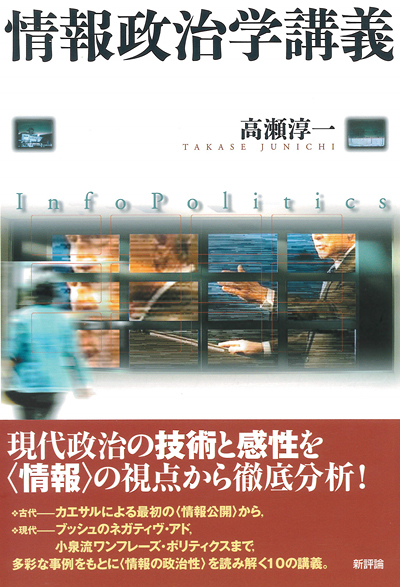
【Book】情報政治学講義 InfoPolitics


【本】高瀬淳一.2005.『情報政治学講義』.新評論.

「民主政治は『説得』で動いている。」という視点は大変良いと思う。ただ、言語による説得をまるで必要「悪」のように扱う姿勢は全く賛成できない。

メディアの偏向は問題ではあるが、情報の流通は良いことである筈。
そこのところを忘れず伝えてもらいたい。

【Book】TAKASE, Junichi. 2005. InfoPolitics. Tokyo: Shinhyoron

"Democracy works based on persuasions." The consistent theme of this book is an obvious but relevant point of view. But cannot agree on the attitude to treat verbal communication to persuade as a "necessary evil".

Bias of media is a problem. But circulation of information is fundamentary a good thing. Hope the readers can remind that when they read this book.

Monday, April 17, 2006

【Comic】私を月まで連れてって fly me to the moon


【漫画】竹宮恵子.『私を月まで連れてって!』.白泉社.

ザ・少女漫画。SFもの。激烈に可愛い。
いやー。こんな可愛い女の子近くをウロウロしていて欲しい。
ヒーロー役のダン・マイルド氏もすこぶる評判良し。
男女感がちょっと古いがそれも許せる可愛さぶり。

【Comic】TAKEMIYA, Keiko. fly me to the moon!. Tokyo: Hakusensha.

THE girly comic. :) SF. Very cute.
Wish if this cute girl (9 years old?) was walking around nearby.
The hero of this story, Mr.Dan Mild is very popular among girls around my age as well. :)
Gender roles are a bit old fashioned.
But because it is away too cute, I can live with that. :p

【Book】トポフィリア Topophilia


【本】トゥアン,イーフー.小野有五・阿部一訳.1992.『トポフィリア』.せりか書房.

うちの学科の必需品・・・かと思いきや読んでる人が意外に少ない。 環境(特に景観美や風景美の感性)と人間の生理・心理特性との関係について。

この本に出てくる場所への偏愛というのは極端でなければ誰でも持つもの。郷土愛の類。 四章の自民族中心主義の説明は大雑把だけど的を射ていると思う。


【Book】Tuan, Yi-fu.1974. Topophilia. Englewood Cliffs, New Jersey: Prentice-Hall Inc.

This book matches with the name of the faculty here. Wonder why only few people read this. This work explore the relationship between sense of beauty of scenery and biological and phycological characters of human being.

Things that this book mentions as "topophilia" is nothing very special despite of the sound of "philia" but something everybody has. If you feel nostalgic when you see the scenery of your hometown, that's topophilia that he is talking about in this book. :)

The fourth chapter talks about ethnocentrism with a very rough grasp. Although "ethnocentrism" sounds a bit too strong, the content makes sense, I supoose.

【Book】危機の二十年 Twenty Years' Crisis


【本】カー,エドワード・ハレット. 井上茂訳.1952. 『危機の二十年』.岩波書店.

国際関係論の初心者が必ず読まされる本。良い本だと思う。

第三章で、日本が国際連盟で人種差別撤廃を訴えるも相手にされず、と書かれているくだりがやはり忘れられない。 歴史の教科書には「国際連盟を脱退して世界の孤児となる」とだけ書かれる時代。その背後にはきっと椅子を蹴って飛び出すに至る紆余曲折がある・・・

「パワー・オーバー・オピニオン」という概念は8章に出てくる。

以下三章より引用。
---------------------------------------------------------
平和会議の国際連盟委員会において、日本代表が、人種平等の問題を提起した。ウィルソン大統領は次のような問を投げた、「この静かな部屋の中で、人種平等について理非を論じてみたところで、部屋の外に出てしまえば、問題にならないであろうのに、どうしてそんなことを」と。その後の歴史には、このような現象の例が多くみられた。(中略)

人類がその国際関係において合理的善に到達することが明らかにできないでいるとすれば、それは人類があまりに愚かであるがゆえに、かかる善を理解することができないでいるためか、あるいは、あまりに邪まであるがゆえに、かかる善を求めようとしなかったためか、そのいずれかであるにちがいない。
----------------------------------------------------------------------------

以下、「第八章 国際政治における権力」より。
----------------------------------------------------------------------------
第三節: 世論を支配する力

 世論を支配する力は、力の第三の形態である。「われらは船ができた、われらは人ができた、われらは金もできた」と唄った「主戦論者たち」は、政治権力の三つの本質的な要素、すなわち軍備・人力・経済力を、正確にみてとっていたのである。しかい、人的力は頭数を単に数えることによって、量られるものではない。ヒュームが論じているように、「エジプトのソルダンとかローマ皇帝は、彼の無辜の民を、彼らの感情も性向も無視して、野獣のように駆使したらしい。しかし彼は、少なくとも、エジプト騎兵団やローマの近衛兵団を、彼らの意見によって人間として統率したにちがいない」。世論を支配する力は、それゆえ、軍事的力や経済的力よりも政治目的にとって本質的でないものではなく、つねに両者と密接に結びついているのである。説得する術は、つねに、政治的指導者の必要品の一つである。修辞は、経世術の歴史において長い名誉ある記録をもっている。だが、宣傅を特に近代的な武器とみる一般の見解は、それにおとらず、たしかに正しいものがある。
 近時、世論を支配する力が、ますます重要視せられてきた最も明白な理由は、政治の基盤が拡大してきたこと、すなわち、その意見が政治的に重要な意味をもつところの人々の数が非常に増大してきたことにある。
------------------------------------------------------------------------

【Book】Carr, Edward Hallett. 1981. The Twenty Years' Crisis. New York: Palgrave.

Something everybody majoring international relation has read once. Very good work.

In its third chapter, this book mentions that Japan proposed at the League of Nations to abolish racial discrimination and nobody listened to it. Our history text book has only one line that Japan withdrew from the League of Nations and became an orphanage of the world. But before it walkouted with anger, there were probably many stories behind.

The important concept of "Power Over Opinion" appears in eighth chapter.

Following is the citation from the third chapter.
------------------------------------------------------------------
In the league of Nations Commission of the Conference, the Japanese had raised the issue of race equality. 'How can you trreat on its merits in this quiet room', enquired the President, 'a question which will not be treated on its merits when it gets out of this room?' Later history provided many examples of this phenomenon. It became a commonplace for statesmen at Geneva and elsewhere to explain that they themselves had every desire to be reasonable, but that public opinion in their countries was inexorable; and though this plea was sometimes a pretext or a tactical manoeuvre, there was often a solid substratum of reality beneath it. (L.O.)

If mankind in its international relations has signally failed to achieve the rational good, it must either have been too stupid to understand that good, or too wicked to pursue it.
------------------------------------------------------------------

The rest below is from "Chapter8: Power in International Politics".
------------------------------------------------------------------
(c) Power over opinion

Power over opinion is the third form of power. The 'Jingoes' who sang 'We've got the ships, we've got the men, we've got the money too' had accurately diagnosed the three essential elements of political power: armaments, manpower and economic power. But manpower is not reckoned by mere counting of heads. 'The Soldan of Egypt or the Emperor of Rome', as Hume remarked, 'might drive his harmless subjects like brute beasts against their sentiments and inclinations. But he must at least have led his mamelukes or pretorian bands like men by their opinions.' Power over opinion is therefore not less essential for political purposes than military and economic power, and has always been closely associated with them. The art of persuasion has always been a necessary part of the equipment of political leader. Rhetoric has a long and honoured record in the annals of statesmanship. But the popular view which regards propaganda as a distinctively modern weapon is, none the less, substantially correct.

The most obvious reason for the increasing prominance attached to power over opinion in recent times is the broadening of the basis of politivs, which has vastly increased the number of hose whose opinion is politically important.
---------------------------------------------------------------------
【Book】中国原論 Chinese Principles


【本】小室直樹.1996.『小室直樹の中国原論』.徳間書店.

駄作。

憲法原論が良かったので手を伸ばしたのだけれど、こちらは失敗。ぶ厚い割りに内容が薄い。何度も何度も何度も同じ話の繰り返し。くどい。うすい。

【Book】KOMURO, Naoki. 1996. Komuro Naoki's Chinese Principles. Tokyo: Tokumashoten.

Poor work.

I felt like reading this because I liked "Principles of Constitution". But this one isn't worth reading. Although it is thick, content of it worth very little. Same stories repeated over and over and over again.

Thursday, April 13, 2006

【DVD】優柔不断な2004年 Indecision 2004


【DVD】コメディー・セントラル.2005.『デイリー・ショウ: 優柔不断な2004年』

三枚セットです。三枚目が一番面白いです。党大会の方はあんまり面白くない。雑誌の記事で読んだ名前の人物を漸く映像で見れました。ああ、こういう人だったのか・・・

【DVD】Comedy Central. 2005. Daily Show: Indecision 2004.

It's a set of three discs. The third one is funniest. The coverage of party conventions is not that much. Eventually became to know how the politicians who appeared in magazine articles a lot look and sound. Ah... so, they look in this way...

Wednesday, April 12, 2006

【Book】日米情報摩擦 US-Japan Information Friction


【本】安藤博.1991.『日米情報摩擦』.岩波書店.

「情報摩擦とは,国家間の摩擦を,国際関係に関する「事実・情報・イメージ」の三相のうち,情報のレベルでとらえたものである。現実の政治関係や経済取引のなかで起こる摩擦の事実そのものではなくて,マスメディアが商品(ニュース等)として提供するための脚色が,程度の差はあれ加わっている。時には誇張,歪曲もともなって,事実から遊離したものとなりかねない。ほとんどの国民大衆は,こうした情報を介してのみ国際関係にふれるから,人々の持つ相手国の国民や,相手国との関係についてのイメージ(意識,世論等)には,情報が決定的な意味を持つ。」

本当に。

新世界情報秩序はチョー大切なわけですよ。
もう、ホントーに解ったぁ?メジャー・メディア!

・・・って絡んでどうする・・・
けどやっぱ2年遅れのコメディを見るのには飽きたわけ!

【Book】ANDO, Hiroshi. 1991. US-Japan Information Friction. Tokyo: Iwanamishoten.

"Friction between countries have three layers; facts, information and image. Information friction is information layer of the three. It is not about the actual facts of politics or trade themselves but it is about information after adaptation by mass-media to provide as commodity(i.e. news). It is sometimes exaggerated or distorted and becomes different from the facts. Because most of the citizens access international relations through such information, information has very conclusive influence to the image (public opinion, impression, reputation...). "

Indeed.

That is why new world information order has meaning here.
Got it? Major media?

...Why am I harassing media people like this...?
Because I'm tired with watching outdated comedy show!!

【Article】脳の意思決定メカニズム Decisions and Desire 


【記事】モース,ガーディナー.2006.「脳の意思決定メカニズム」.『DIAMONDハーバード・ビジネス・レビュー』.31巻4号.60-70頁.

意思決定には、理性(ディベータ的に言うならばロゴス若しくはマター)と感性(ディベータにはパトス若しくはマナー)両方が関係している、という当たり前な内容。脳科学に視点を置いているが、fMRIでわかることは限られていると言明しているところなど好感が持てる。一般の読者に大変わかりやすく書いてある。

【Article】Morse, Gardener. 2006. Decision and Desire. Harvard Business Review. Jan 1, 2006.

Its main message is a very obvious thing. Both rational nature (debaters call this Logos or Matter) and emotional nature(for debaters, it's Pathos or Manner) matters in decision making. Although it's from neuroscience, it also says that there are very limited things that fMRI can clarify and sounds very reasonable and fair. It is very easy to read for readers out of touch with neuroscience.

【Book】ウルトラ・ダラー Ultra Dollar


【小説】手嶋龍一.2006.『ウルトラ・ダラー』.新潮社.

面白い!!

売り文句は「これを小説だといっているのは著者だけだ!」
ですが、どんなに精緻なリサーチをしていても、やはり小説は小説と念頭において読まないといけないと自分に言い聞かせながら読みました。そして小説として面白いと思います。ただ男女関係の描き方が微妙。出てくるのダメ男とダメ女ばかりじゃない?某高官2名がいるか・・・。しかし両方ともパートナーなしの女。何故まともな男,幸せなカップルは出てこんのか・・・

北朝鮮のドル札偽造事件についての作品です。

手嶋龍一のオフィシャル・サイトへはこちらから。

【Novel】TESHIMA, Ryuichi. 2006. Ultra Dollar. Tokyo: Shinchosha.

Worth to read.

Although the publisher advertised this book saying "the author is the only person who insists that this book is a novel", I told myself many times that this is a novel. I respect the detailed
research Teshima conduct all the time and it does make this novel very realistic. Good novel. All the romances in this story are doomed though... Why there is not a happy couple in this story at all?

This is about the relationship between North Korea and the bogus note found in Ireland.

You can jump to the Teshima Ryuichi's official site here.

【Book】美を脳から考える Beauty and the Brain


【本】インゴ・レンチュラー他.野口薫・芋阪直行監訳.2000.『美を脳から考える』.新曜社.

美的感性には、人類共通のものと、文化的なものがある。この本は主に前者、先天的な部分についてです。

序文では「事物の美はそれを想う心に宿る」というディビッド・ヒュームの言葉をひいています。おそらくその説明を脳の構造に求めているのだと思われますが、それはちょっと大雑把すぎるように思います。

【Book】Rentschler, Ingo;Herzberger, Barbara and Epstein, David. 1988. BEAUTY AND THE BRAIN : Biological Aspects of Aesthetics. Basel: Birkhauser Verlag AG

If you categolize sense of beauty to two; universal one for all human beings and cultural one, this book is about former one.

It cites David Hume's words in the first chapter. "Beauty in things exist in the mind which contemplates them". It seems that this book find the explanation of it in biological structure of our brain and I think it might be a bit too rough.

Tuesday, April 11, 2006

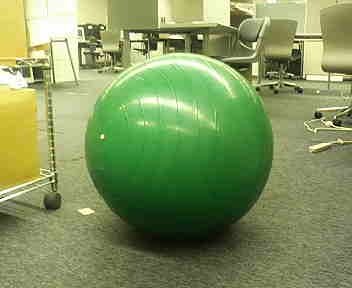
一体どこから? Where did this come from?


最近、配置換えがありデスクの位置が微妙に変わりました。プリンタまで行くとき、まだ目を開けていないといけません。

さて、今日はそろそろ帰ろうかなぁ、と思って最後の印刷物をプリンタまで取りに行こうとしたらこの通り。謎の物体が行く手を塞いでいました。(いえ、全然通れますけどね)

ナニ?コレ?

疲れ目のせいで見た幻覚ではないと証明するべくシャメしてしまいました(笑)

おそらく今も忙しく作業している両側の人々のどちらかのものなのでしょう...これで何するのか興味津々ですが、夜も更けているので帰ろうと思います。お先にー。

Recently, there was a relocation of desks in this office and my desk also moved a little. So, I can't come to printers with eyes shut yet. Will get used to it soon.

Anyway, because it became pretty late, I thought it's about time to go home. And I went to the printer for getting the last documents for today printed out. Suddenly, a big round thing was stucking in the middle of the walk space.

...What this??

I took its photo just to confirm that I wasn't seeing illusions due to the tiredness. :p

It should belong to either person still working here next to me on both side. I'm very curious for what he brought this but too tired to ask. So, sorry, colleagues, I need to sleep. :p

【Book】脳の探検 Brain, Mind, and Behavior


【本】ブルーム,フロイド・E.1985.『脳の探検』.久保田競監訳.講談社.

基礎的なことをザザーッとお浚いするのに便利。カラーのイラストも豊富。ちょっと古いのが難点。

ブローカ野とウェルニッケ野について触れているのは、「第八章 思考と意識」の154頁以降。

【Book】Bloom, Floyd. E. 1985. Brain, Mind, and Behavior. (Translated to Japanese by Kubota, Kisou et al. Tokyo: Kodansha)

When I need to check very basic information, this book is helpful.
With a lot of colorful illustrations. A little bit old though.

The part which touch upon Broca's area and Wernicke's area is in 8th Section. (In Japanese translation, p.154 and later)

【Internet】投票所まで笑って突っ込め Laughing All The Way To The Ballot Box

【ネット】ロング,ブライアン. 2004.「『デイリー・ショウ』の視聴者は政治クイズでピカイチ」.CNN.com. 9月29日 東部夏時間午後4:17 (グリニッチ時間20:17).

中ほどの「あなたもクイズにトライ」をクリック。
2004年米国大統領選物知りクイズに挑戦できます。
あなたのレベルはどのくらい?

ちなみに以下が私の結果(笑)
ええ。どうせニュースオタクです。
(ていうか質問が簡単すぎです)
----------------------------------------------------------------
あなたは初挑戦時、6問中6問正解でした。
すばらしい!!
でもいつ寝てるの?

他の人の平均値と比べてみよう!
・ジョン・ステュワートの「デイリー・ショウ」の視聴者: 3.59問正解
・ジェイ・レノの「トゥナイト・ショウ」の視聴者: 2.95問正解
・ディビッド・レターマンの「レイト・ショウ」の視聴者: 2.91問正解
・深夜のお笑い番組は見ない人: 2.62問正解
---------------------------------------------------------------

つーか、半分も当たってないじゃないですか!
大丈夫か、アメリカ国民!

【Internet】Long, Bryan. 2004. 'Daily Show' viewers ace political quiz.
CNN.com. September 29. Posted: 4:17 PM EDT (2017 GMT) .

Click "Take the quiz" link in the middle of the article.
You can take a test about U.S. Presidential election 2004.
Which range of score do you position?

This is the result of mine! :D
Yes, I'm a news geek, alright.
(Actually, the questions are very easy)
--------------------------------------------------------
You got 6 out of 6 correct on your first attempt.
Excellent work!
But when do you sleep?

Check your score against these averages:
• "The Daily Show" with Jon Stewart viewers - 3.59 correct
• "The Tonight Show" with Jay Leno viewers - 2.95 correct
• "Late Show" with David Letterman viewers - 2.91 correct
• No late-night comedy viewing - 2.62 correct
------------------------------------------------------------
Wait a minute. People can answer less than a half of the questions?
Are you doing okay, American friends!?

【Article】理由、ロボットそして心 Reasons, Robots & Mind

【論文】クラーク,アンディ.2001.「理由、ロボット、そして心」.『心と言葉』.16巻2号.121-145頁

この論文の主題は「どのようなメカニズムが理性を成立させるのか?」。

「我々の脳が特殊なのは疑いようはない。しかし、理由付けする者、思考する者、知ろうとする者としての我々の特殊性を理解するためには、更に広い視野が必要である。人工物・外部記号・科学や芸術と文化の様々な基盤。それらを伴った環境における脳と身体を対象とすることである。」

という部分も印象に残った。

【Article】Clark, Andy. 2001. Reasons, Robots and the Extended Mind. Mind & Language. pp.121-145

The main theme of this article seems to me "How is rationality mechanically possible?"

The following part was also memorable for me. :)

"No doubt there is something special about our brains. But understanding our peculiar profiles as reasoners, thinkers and knowers of our worlds requires an even broader perspective: one that targets multiple brains and bodies operating in specially constructed environments replete with artifacts, external symbols, and all the variegated scaffoldings of science, art and culture."

Monday, April 10, 2006

【Article】曖昧さの認識説 Epistemic Theory of Vagueness

【論文】ジャクソン,フランク.2002. 「言語、思考、曖昧さの認識説」.『言語とコミュニケーション』.22巻3号.269-279頁

この論文は曖昧さの認識説に反対の立場です。

禿げているかどうかはどの時点で判定できるか、というイントロが笑いを誘う。しかし蓋を開けるとそれはただのイントロではなく、なんと最後までその例でひっぱるという、頭髪にコンプレックスのある人は不快な思いをしそうな一品。テーマの割りに読みやすいです。

【Article】Jackson, Frank. 2002. Language, thought and the epistemic theory of vagueness. Language & Communication. Vol.22 Issue3. pp.269-279

This article is against the epistemic theory of vagueness.

How much bald a man turns makes you say he is bald? That is an example to let readers get the idea about the theory. He opens his case with this example and actually, uses this same example until the end of this article. People who have complexed feeling about their hair might get offended. But very easy to read while the theme is a complicated one.

【Article】超結合説 Radical Connectionism

【論文】オブライエン,ジェラルド・オピー,ジョン.2002.「超結合説:言葉で(なしで)考える」.『言語とコミュニケーション』.22巻3号.313-329頁

実験の類は全く含まれていない、高度に抽象化された仮説。この論文は人間の認知活動には抽象化された情報は関係していないという立場である。自然言語は認知活動に適していないと考えているようだ。自然言語がどれほど人間の思考を表象しうるか、というテーマは大変興味深い。久々に読み直したい。

【Article】O'Brien, Gerard and Opie, Jon. 2002. Radical connectionism: thinking with (not in) language. Language & Communication. Vol. 22 Issue 3. pp.313-329

This article doesn't involve experiences or anything like that. It is more about highly symbolized model about human capacity for language command and thoughts. This article takes the position that "cognition never implicates an internal symbolic medium, not even when natural language plays a part in our thought processes". The author thinks that natural languages are not representing human thoughts and as for cognitive activities, internalised language works better. The theme about how much natural language can represent human thoughts sounds very interesting to me. Hope to read this soon again.

【Book】一九九一年日本の敗北 1991: Japan Lost


【ルポルタージュ】手嶋龍一.1993. 『一九九一年 日本の敗北』.新潮社

ある日突然勃発した湾岸戦争。侵略戦争に立ち向かうべく、国際社会は急速に結束する。そんな中、日本政府は頭を抱えた。

①「命の盾」となった邦人たち
②米国との同盟関係に入る亀裂
③九条解釈に揺れる国会論議
④縦割り省庁の縄張り争い
⑤日本経済の生命線である湾岸石油の危機
⑥吹き荒れるジャパン・バッシング...

課題は山積み以上の状態だった。他国籍軍の戦費を賄うため、90億ドルの緊急増税を受け入れた日本人は呆然とした。日本では税金も「血税」と表現される。けれど国際社会は文字通りの意味での「血」の貢献を求めているのか。九条は全くのナンセンスだったのか?安全保障上の大きな転機となった湾岸戦争を精緻な調査の元に読み解く好書。

私は当時NHK特派員だった手嶋龍一のこの本のおかげでルポルタージュものに目覚めました。

【Reportage】TESHIMA, Ryuichi. 1993. 1991: Japan Lost. Tokyo: Shinchosha

Persian Gulf War stroke the international society suddenly. While international community formed the multi-national force very fast, Japan was stuck very badly.

1) Japanese citizens captured and became "Human Shield"
2) Crisis of US-Japan alliance
3) Shaking Diet with heating debate over the Article 9 (prohibiting intervention in foreign war)
4) Endless Fights over the turf among ministries
5) Risking the oil supply from Persian Gulf which was (and is) a life line of Japanese economy
6) Stormy Japan Bashing

It was something more than just a pile of problems. Japanese tax payers accepted emergent tax increase for raising 9 billion USD to support the multi-national force. And then, they found that international society was expecting "blood" tax in literal meaning. (In Japanese, ordinary tax is also expressed as "blood tax") So, was the Article 9 just a huge piece of nonsense at the end of the day? That became a significant turning point for the debate over Pacifism in Japan. This book explains what was the Persian Gulf War for Japan based on a very detailed research.

This excellent work of Teshima Ryuichi who was a senior correspondant of NHK back then told me how powerful a reportage can be. :)

【Book】バイバイ、エンジェル Bye-bye, Angel


【小説】笠井潔. 1995. 『バイバイ、エンジェル』. 東京創元社

パリで起きた殺人事件の探偵役は、珍妙な宗教観の日本人矢吹駆。何故か現象学的アプローチが捜査の最善策だと信じている。まるで自分ひとりがこの世の真実を知っているかのような鼻持ちならない態度。
何よりも謎なのは、可愛いパリジェンヌなヒロインが彼に惚れるところ。しかも駆君は歯牙にもかけない。

っっっっっなっっんだっっ、そりゃっ!!
何様だ、この男は!

しかし、シリーズ通して全部読んでしまった私。
『サマー・アポカリプス』『薔薇の女』『哲学者の密室』と続きます。

テロルの論理やカタリ派の信仰について触れているところが、面白いと言えば面白かったです。

【Novel】 KASAI, Kiyoshi. 1995. Bye-bye, Angel. Tokyo: Tokyo Sougensha

A murder case in Paris. The detective here is a Japanese with very geeky, geeky religious belief, Yabuki Kakeru. He somehow believes that phenomenological approach is the best method at investication spots of murder cases. And he behaves as if he is the only person on earth who know the truth of this world. And the strangest thing of all is that the heroine, a very cute Parisienne, becomes enamored with Kakeru. And Kakeru doesn't give a fig for her.

wwwwwWWhat? How come it's possible?
Who in heaven does he think he is???

Hahaha. :D But I read all the works in this Yabuki Kakeru series.
It continues to "Summer Apocalypse", "A Woman of Rose" and "Locked Room for A Philosopher".

It add some tastes with backgrounds of concepts of terror and revolution in Europe, belief of Cathors and so on. That part is a little interesting.

【DVD】占領地への道程 Journey to the Occupied Lands


【ドキュメンタリー番組】「占領地への道程」(PBS Frontline)

秀作。

ガザ地区、ヨルダン川西岸地区を3年に渡って訪れる。
ユダヤ居留民とパレスチナ住民の視点を交互に取り上げる。
両側の言い分を淡々と聞いていく中で、和解への道の険しさがひしひしと伝わってくる。

土地所有のコンセプト自体が両者でかなり違うというところが勉強になった。

「世界で一番長い憎しみ」が、どちらかというとユダヤ人の視点で撮られているのに比べると、こちらはどちらかというとパレスチナ人の視点であるように思える。

【Documentary Program】 "Journey to the Occupied Lands" (PBS Frontline)

Great work.

In this film, the director interviews both Jews and Palestinians visiting Gaza and West Bank in three years. Both parties explain their perspectives with very plain English words. (I wish if I could understand Arabic language...) But in such a calm, plain, ordinary daily life, we can see how it is difficult for them to reach agreements and mutual compromises.

It told me how their concepts of "owning land" are different each other.

Comparing to "the Longest Hatred" which projects Jewish perspective more, it seems to me that this program show more Palestinian perspective.

Sunday, April 09, 2006

【Book】知識人とは何か Representations of the intellectual


【本】エドワード・サイード. 1998. 『知識人とは何か』(大橋洋一訳)東京:平凡社

ディベートはリベラル・アーツの中のリベラル・アーツだ、と書いたのは、並木周さん(並木周(1997)21世紀に向けアカデミック・ディベートはどうあるべきか『ディベート・フォーラム』全日本英語討論協会出版会p20)。サイードのこの本を読むと、並木さんの言葉が思い出される。

サイードの考える知識人は、博識な人という範囲を大きく越えている。そこには猛烈な倫理観だか哲学だかに裏打ちされた責任感が見える。そしてその責任とは、どうやら良いディベータであることのようだ。(ディベータが良い知識人だ、ということではなくて、知識人が良いディベータなのですね。逆は真ではないのが残念。)

例えばこんなことが書いてあります。

  • 知識人とは亡命者にして周辺的存在であり、またアマチュアであり、さらには権力に対して真実を語ろうとする言葉の使い手である。
  • またこのようないとなみを成功させるには、劇的なもの、反抗的なものに敏感に反応するような感性を養い、ただでさえすくない発言の機会を最大限利用し、聴衆の注意を一身にひきつけ、吉とユーモア、それに論争術で敵対者を凌駕するよう心がけねばならない。(中略)知識人には、虚飾と尊大な身振りよりも、自己に対する冷笑こそ似つかわしく、言葉を濁すことよりも、ずけずけものを言うことのほうが似つかわしい。
  • わたしにとってなにより重要な事実は、知識人が、公衆に向けて、あるいは公衆になりかわって、メッセージなり、思想なり、姿勢なり、哲学なり、意見なりを、表象=代弁(レプリゼント)し肉付けし明晰に言語化できる能力にめぐまれた個人であるということだ。
うーん・・・なんだか凄く「このままじゃいかん!」って思わされたり(笑)。良い知識人でも良いディベータでもない自分がチョー役立たずに思えます。チャンスには恵まれてる筈なのに・・・うう・・・まあ地道な努力が大切ですよね・・・

【Book】 Said, Edward W. 1994. Representations of the Intellectual, The 1993 Reith Lectures. London: Vintage

It's Namiki Shu-san who wrote that debate is liberal arts of liberal arts (Shu Namiki (1997) Academic Debate toward Next Millennium, Debate Forum, Volume XII Number 4, NAFA Press, Tokyo, p20). When I read this Said's work, I remind the words of Namiki-san a lot.

The intellectual that Said talk about in this book is far beyound knowledgeable people. It seems that he saw incredibly heavy responsibility of them backed by ethics, philosopy or something in that kind. And the responsibility is to be a good debater. (It doesn't mean that debaters are good intellectuals but intellectuals are good debaters. Unfortunately. :p)

He says in this book, for example,
  • Hence my characterizations of the intellectual as exile and marginal, as amateur, and as the author of a language that tries to speak the truth to power.
  • It involves a sense of the dramatic and of the insurgent, making a great deal of one’s rare opportunities to speak, catching the audience’s attention, being better at wit and debate than one’s opponents. And there is something fundamentally unsettling about intellectuals who have neither offices to protect nor territory to consolidate and guard; self-irony is therefore more frequent than pomposity, directness more than hemming and hawing.
  • The central fact for me is, I think, that the intellectual is an individual endowed with a faculty for representing, embodying, articulating a message, a view, an attitude, philosophy or opinion to, as well as for, a public.

This book makes me feel "I have to work harder!!". :p Because I'm not either good intellectual or good debater and feel so guily for not being so despite of tons of opportunities to learn debating...mmm... Well, one step a time, ne! :)

【DVD】マック毀損 McLibel


【ドキュメンタリー映画】 『マック毀損』 (2005)

最高に好み。ストライクゾーンでした。

メディアや市民団体が「マクドナルドは健康や環境,動物の権利に悪い」といい始めた時,マクドナルドは「謝罪しなければ起訴するぞ」と言いました。世界的なメディアが次々と降伏していく中,1人の植木屋さんと1人の郵便やさんが立ち上がる!!「大企業を批判する権利を守れ!」

しかし,そうそうたる顔ぶれの弁護団を擁するマクドナルドに対し,この二人にはLegal advisorすらいない状態。しかも証明責任は一方的に彼らの側に。負けたら禁固刑!という闘いを前にそれでも降伏しない二人。

1985年から実に15年間、言論の自由と名誉毀損訴訟を公平にするため、闘い続けた素人二人組みの話。 音楽がちょっと安っぽいが,それさえも心地よいヒロイックな物語。これがドキュメンタリーだなんて凄い!

【Documentary Film】 McLibel (2005)

This is right in my strike zone. :) I love this film!

When mass-media and NPOs started criticizing McDonald for providing unhealthy food, bad for environment, poor labor condition, etc. etc..., McDonald responded immediately. "If you don't apologize, you are going to be sued." When even giant media surrendered one after another, two people stood up. One was a gardener. Another was a postman. "Protect our right to criticize big corporations!"

But while McDonald had a very high standard (and expensive) lawyer's team, they didn't have even a legal advisor. And burden of proof is completely on them not McDonald. If they lose, that means that they would spend years in jail! And they still don't surrender.

Since 1985, for 15 years, the two lay people fought for freedom of speech and fairness of libel cases. BGM is a bit cheezy. But so what!? Even cheezy music makes me so tuned into this heroic story. It's a surprise that this is a documentary.

【Book】報道戦争 War in Journalism


【本】江口浩. 1997. 『【TOKYO発】報道戦争』.東京:晩聲社.

率直な本だと思いました。

共同通信社に長年(1960年から)勤めた著者が、日本の情報赤字の原因について意見を述べている。彼の説明は現場を知っていることから来る現実味に溢れている。

特に、アジア太平洋放送連合の1994年の総会テーマが、「アジアは発信する」だったと書いてある部分では、色々考えてしまった。

アジア太平洋放送連合(ABU)のホームページはこちら

【Book】 Eguchi, Hiroshi.1997. 【From Tokyo】war in journalism.Tokyo: Bansansha.

Very straight forward.

The author has worked for Kyodo Press since 1960. And he explains how he see the cause of the "information trade deficit" of Japan. His detailed explanation knowing the real spots of journalism sounds very realistic.

Especially when I read that the theme for the general assembly of Asia-Pacific Broadcasting Union in 1994 was "Asia speaks out", it made me think a lot of things.

If you feel like figuring out about Asia-Pacific Broadcasting Union (ABU), visit here.